What Do You Actually Do on a Boat Trip Near Vancouver?
After 15 years on the water, the honest answer is not just fishing, sunsets, or sightseeing — it’s how the ocean makes people feel.
Related questions: what is there to do on a boat in Vancouver, is a boat trip worth it, what to do out on the ocean, private boat charter Vancouver.
It’s the question we get more than any other: we’re going out on a boat — but what do we actually do out there?
After fifteen years on this water, here’s the honest answer most operators won’t give you: it’s not really about doing. It’s about how the ocean makes you feel — and that’s different for every single person.
We’ve watched it for years. Some people go quiet the moment they’re aboard and stay lost in their own thoughts — you can see something moving in them, and you don’t interrupt it. Some are lit up with excitement the whole way. And some are restless, asking “so what are we going to do?” the entire time. There’s no single right answer, because the ocean gives each person something different.
What we’ve learned is that the job isn’t to entertain people. It’s to read them, and then set up the conditions for the experience they’re quietly looking for. Here are a few of the ways that plays out.
Reading the group, then choosing the moment
Most guests step aboard with a blank slate — they don’t know what’s out here or what to expect. So sometimes the captain simply decides, based on who’s in front of him.
One group was calm and clearly comfortable just being present. So we took them to a small, quiet bay with a little island and a near-empty dock. It was late afternoon, sun going down. We tied up, walked the island in fifteen or twenty minutes, then sat down, grilled a little food, had a drink, and headed back.
They loved it — and couldn’t quite say why. We could: it was the light, the setting, the quiet, a bite to eat and a drink, all combining to drop them into a state of genuine peace.
That group was architecture faculty and students from a major U.S. university — sharp, accomplished people. When we crossed paths again ten years later, they could still describe that afternoon in detail, and called it one of the most memorable experiences of their lives. A small change of environment had given them something that lasted a decade. That’s the quiet power of the ocean.
Giving busy people their first real silence
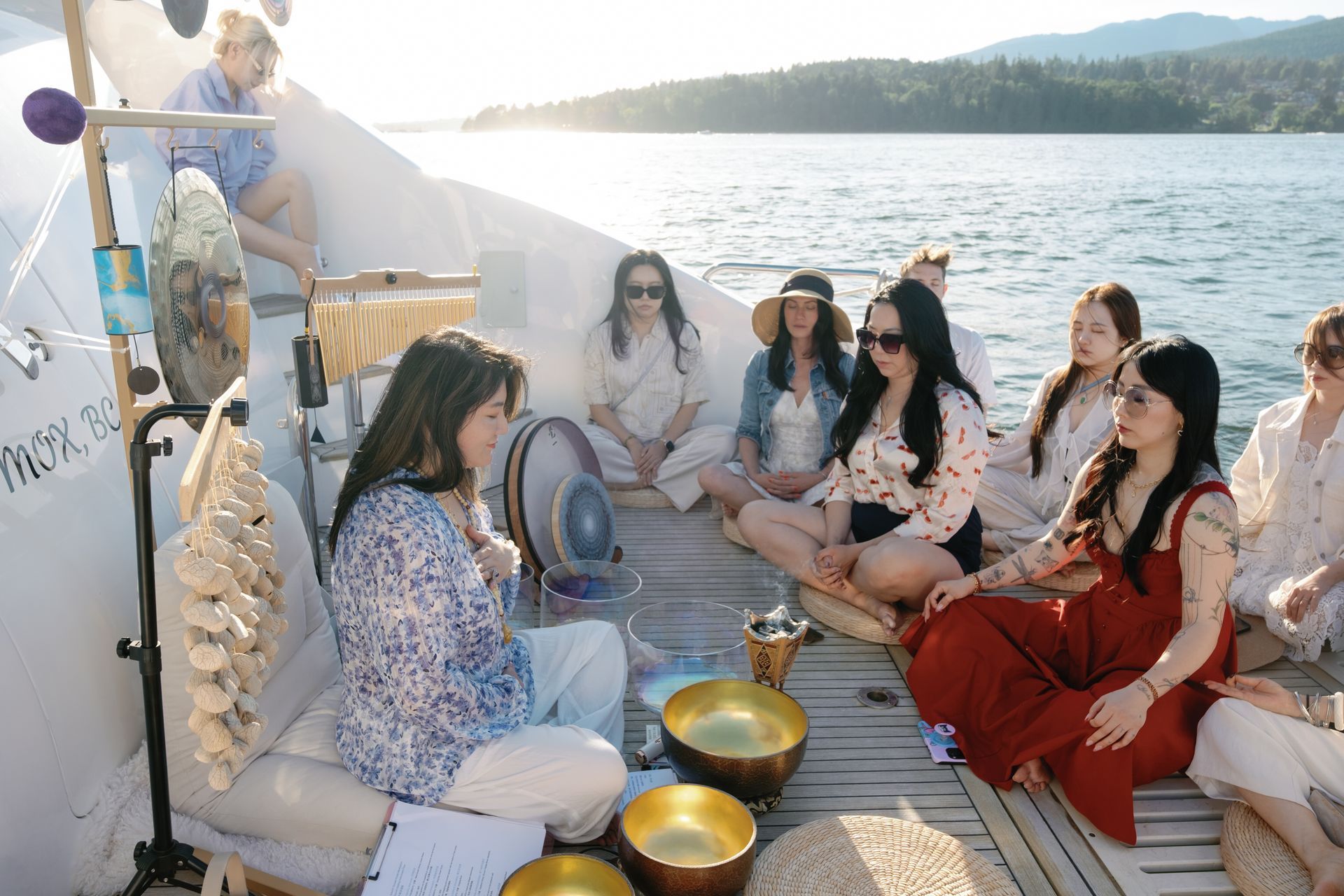
Some of our guests live at the center of attention — surrounded, deferred to, rarely alone with their own thoughts. We take them to a sheltered bay, anchor, and just sit. Lie back. Watch the sky. Listen to the wind.
For the first half hour, they can’t settle. What are we doing out here? My answer is always the same: Stop. Be with the environment. Be with yourself. Listen to what’s inside.
And almost every time, it works. Within an hour or two, people who command rooms for a living tell me, with real feeling, that they haven’t been truly still in decades — that they’d forgotten what it’s like to be alone with their own mind. That stillness shows them a different kind of strength than the one they’re used to.
Reading the coastline
Other people light up when you show them the shore. We move slowly along the coast and talk through the geography, the landscape, and the stories behind the waterfront homes — each one different, each with a history we’ve picked up over years from old captains and longtime locals.
One group of about ten visitors from inland Canada looked, on first impression, like the last people who’d care — tattoos, casual clothes, drinks in hand before they’d even boarded. Then I started pointing out the houses and the history, and they were riveted: full of questions, completely absorbed, quietly taking it all in. Two hours later, one of them told me it was the most enjoyable experience he’d had in fifty years. It worked so well we turned it into a regular trip: cruising the coastline, reading the architecture and the stories behind it.
Doing something with your hands
Not everyone wants stillness — some people need to do. For them, we anchor in a bay, drop crab traps, and wait. People who started the day with their hands in their pockets are soon jumping up to haul the traps, grab the catch, run the whole thing themselves. Kids turn back into kids — and so do the adults. Then we cook what we caught and eat it together. Every time, the energy is pure delight.
The same instinct is why fishing works so well out here. It demands total focus — on the gear, on whether anything’s biting, on that jolt of excitement when you pull one up. That kind of full, hours-long absorption in a single thing is a pleasure that’s genuinely hard to find anywhere else.
The honest takeaway
So — what do you do out on the water near Vancouver? You can fish, catch crab, watch a sunset, read a coastline, or do nothing at all. None of those is really the point. The point is what the ocean does to you: it settles your mind, holds your attention, and gives you a feeling unlike anything in ordinary life.
You don’t need a goal. The experience is the thing. That’s why people keep coming back to the water — and why we’ve never been able to give a short answer to a simple question.
Want one of these tailored to you — stillness, a catch, a sunset, a coastline? That’s exactly the kind of trip we help put together.